
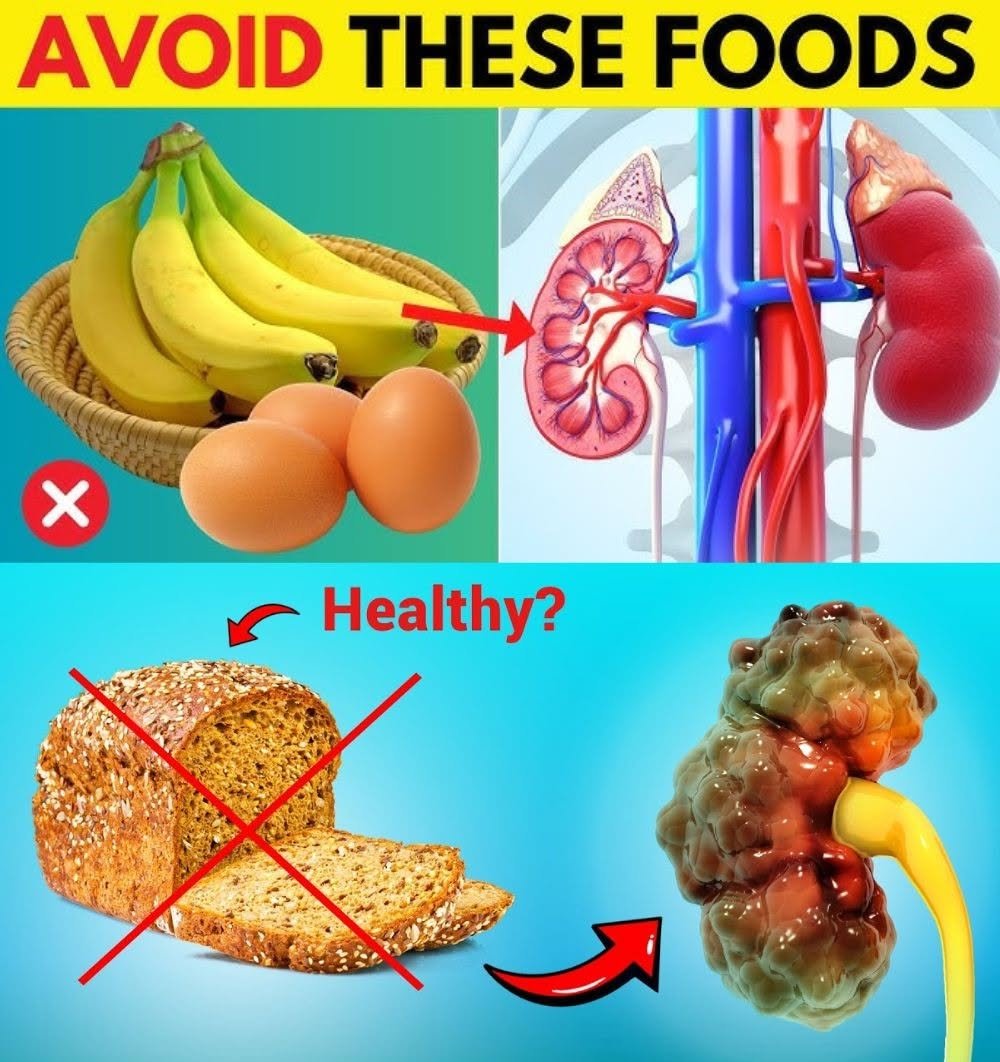
The title “12 Foods That Are DESTROYING Your Unhealthy Kidneys You Should AVOID!”
is sensationalized. Whether a food is harmful depends on the person’s kidney function, medical conditions, and overall diet.
For people with chronic kidney disease, healthcare professionals may recommend limiting certain foods. Common examples include:
1. Highly Processed Foods
Often high in sodium, which can increase blood pressure and strain the kidneys.
2. Processed Meats
Bacon, sausage, hot dogs, and deli meats are typically high in sodium and preservatives.
3. Salty Snacks
Chips, crackers, and instant noodles can contain large amounts of sodium.
4. Sugary Drinks
Regular consumption may contribute to obesity, diabetes, and kidney disease.
5. Excessive Fast Food
Often high in sodium, calories, and unhealthy fats.
6. Large Amounts of Added Sugar
May worsen diabetes risk, a major cause of kidney disease.
7. Excessive Alcohol
Can affect blood pressure and overall health.
8. Foods High in Potassium (for some kidney patients)
Examples include bananas, potatoes, tomatoes, and oranges. Not everyone with kidney disease needs to avoid these; it depends on blood test results.
9. Foods High in Phosphorus (for some kidney patients)
Examples include processed foods containing phosphate additives, cola drinks, and some packaged foods.
10. Excessive Red Meat
Large amounts may increase the kidneys’ workload in some people.
11. Canned Soups and Ready Meals
Often contain very high levels of sodium.
12. Excessive Protein Supplements
Some people with advanced kidney disease may need to moderate protein intake under medical supervision.
What Helps Protect Kidney Health?
- Control blood pressure and blood sugar.
- Stay hydrated unless your doctor advises fluid restriction.
- Eat plenty of fruits and vegetables appropriate for your condition.
- Avoid smoking.
- Maintain a healthy weight.
- Follow medical advice if you have kidney disease.
If you have been diagnosed with kidney disease, I can provide more specific dietary guidance based on the stage of kidney disease and any restrictions you’ve been given.
Leave a Reply